

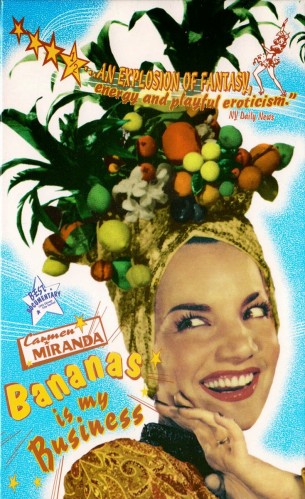
Dreaming Edifices: Interactive Auto/Biography and New Narrative Architectures in Helena Solberg’s Carmen Miranda: Bananas is My Business
Published in a/b: Auto/Biography Studies, January 2024
This article examines how filmmaker Helena Solberg uses Carmen Miranda’s celebrity to construct an interactive autobiographical narrative. Drawing on narrative theory and feminist film criticism, I argue that Solberg creates formal innovations that challenge conventional distinctions between biography, autobiography, and documentary film.
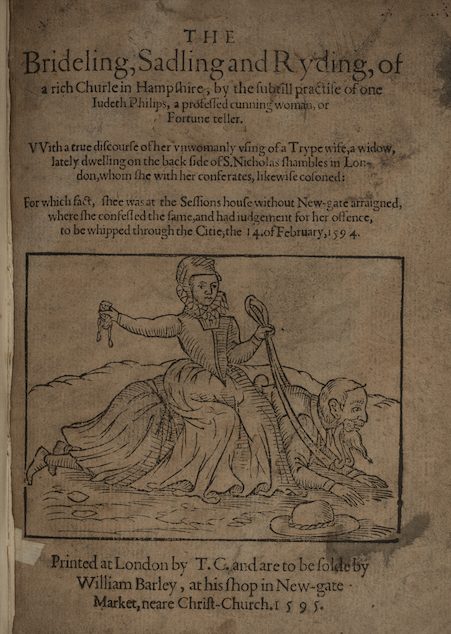
Keywords in Context: Women and Crime
Co-Author with Kirsten Saxton
Women Writers in Context, Women Writers Project, Northeastern University, July 2024
This digital exhibit provides contextual analysis of four early modern texts representing women accused or convicted of crimes, spanning fortune telling, fraud, and murder from 1595-1699. Designed as a pedagogical resource for the Women Writers Project’s digital archive, the exhibit helps researchers and students understand how gender, crime, and narrative intersect in historical women’s writing.
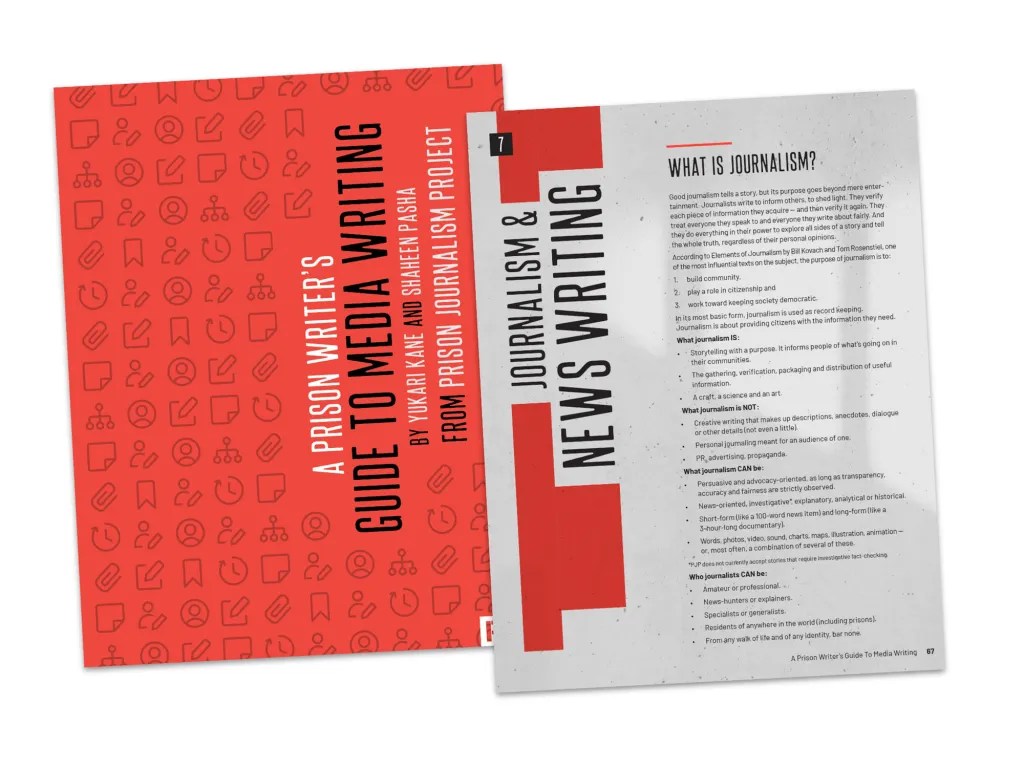
A Prison Writer’s Guide to Media Writing
Managing Project Editor with authors Yukari Kane and Shaheen Pasha
Prison Journalism Project, March 2024
This first-of-its-kind journalism handbook for incarcerated writers includes 14 instruction modules, stories from incarcerated writers, a style guide and a duty of care section. The handbook is an excellent resource for journalism education, whether as a textbook for a course or a resource guide for prison journalists.
Studies in Crime Narratives
Co-Editor with Kirsten T. Saxton
University of Wales Press Book Series
About the Series
This series examines crime narratives across genres, time periods, and geographies using contemporary critical approaches.
Topics of Interest
- Postcolonial crime narratives
- Queer criminalities and gender violence across historical periods
- Crime narratives in digital media, interactive gaming, and graphic novels
- Prison abolition, racial justice, and criminal legal system reform
- Crime television in the age of streaming and transnational circulation
- Feminist voices in true crime podcasting
- Border violence, transnational crime networks, and sovereignty
- Disability, neurodivergence, and criminal detection
- Historical true crime, cold cases, and archival methods
- Surveillance, policing, and digital privacy
- Ecoviolence, posthuman ethics and non-human crime
- True crime and political narratives
- And more!
Submit a Proposal
We welcome pitches for monographs and edited collections that expand crime narrative scholarship.
Contact: studiesincrimenarratives@gmail.com
Scenes of the Crime: Criminal Narratives and Embodied Geographies
Co-Editor with Kirsten Saxton and Colette Guldimann
In Progress
This interdisciplinary edited collection examines how crime narratives construct “scenes” as multilayered spatial formations where embodied geographies, generic territories, and cultural memory intersect across literature, film, and television. Contributors analyze case studies spanning 1896 to 2024, from Bengali environmental detective fiction to European speculative crime narratives to U.S.-Mexico border novels and beyond, to demonstrate how different spatial configurations—colonial contact zones, traumascapes, borderlands, and necropolitical territories—generate distinct epistemologies of detection, violence, and justice. Rather than treating the scene of the crime as mere backdrop, the collection reveals how crime narratives produce meaning through overlapping dimensions, where bodies become crime scenes, genres mirror contested boundaries, and landscapes emerge as palimpsestic sites where historical trauma and contemporary violence converge.

Celebrity Suites: A Woman Filmmaker Telling Her Own Story Through Another Woman’s Fame
Ph.D. Dissertation, University of California, Santa Cruz, 2025
This dissertation examines three films in which women filmmakers use celebrity subjects to tell their own stories: Lourdes Portillo’s Corpus: A Home Movie for Selena (1999), Helena Solberg’s Carmen Miranda: Bananas is My Business (1995), and Valérie Lemercier’s Aline: The Voice of Love (2020). Drawing on autotheory and autofiction as critical reading practices, I argue that these films create hybrid filmic subjects where boundaries between filmmaker and celebrity become productively blurred, resisting conventional categorization as biographical documentaries or biopics. Each filmmaker leverages celebrity iconography as a shared cultural language to theorize questions of identity, cultural belonging, and transnational experience across the hemispheric Americas.
 Emily Does English